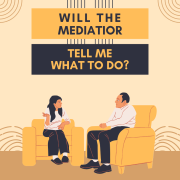

I Need an Advocate but Can’t Afford an Attorney. Is Mediation the Answer?
When facing a dispute, it can feel overwhelming trying to ensure that you get the resolution—and often, the restitution—that you feel you deserve. Having an attorney with that experience and the means to advocate for you might sound like the right solution, but what if you can’t afford their services? Is mediation the answer?
If you truly feel that you need legal counsel to advocate on your behalf, then you are encouraged to consult an attorney. In most cases, your legal counsel is welcome to attend mediation with you. However, if the reason you feel an attorney is necessary is that you’re unclear how mediation works—and why mediation often makes it easier for people to advocate for themselves—it’s worth learning more about the process and the ways you can better advocate for yourself.
Here’s how mediation can create an environment that allows people to more easily advocate for themselves and self-advocacy tips that may better prepare you for mediation.

What is Mediation?
It’s important to learn how mediation is different from taking your dispute to court, where one party “wins” and another “loses” based on the decision of a judge. With mediation, it’s an alternative resolution solution in which both parties involved meet with an impartial third party—a trained mediator—who remains neutral and doesn’t act as a judge who dictates a settlement based on who is “right” or “wrong.”
Instead they guide and structure the conversation in a way that facilitates open communication and allows both sides to be heard in a safe, confidential environment, helping those involved to reach a mutually beneficial resolution. Instead of someone “losing” in the courts, both parties often walk away feeling like it was a win-win.
The Mediation Process
Every dispute—from a small claims case or divorce to specialized mediation—is unique, but the mediation process generally follows the same set of steps. First, the mediator will allow both sides to speak uninterrupted and provide their perspective, the impact the dispute has had on them, and what type of resolution they’re seeking. The mediator will then summarize and clarify the issues they hear from each party, and once it’s confirmed there are no outstanding misunderstandings, the participants are then encouraged to arrive at a dispute resolution that satisfies both parties. Once the agreement is reached and signed, it becomes a contract enforceable by the courts.
Why Does Mediation Make It Easier to Self-Advocate?
Going before a judge, paying expensive legal fees, and possibly spending weeks or months to resolve a dispute in court can add extra stress to an already stressful situation. Mediation eliminates the extra time and money, and provides a more intimate and confidential environment to have your dispute heard and resolved.
The mediator has extensive training in ways to ensure that both sides are given equal opportunity to speak on their own behalf, and has the experience to deal with any potential conflicts that may arise. This safe space for open, honest communication encourages those involved to share their concerns and advocate for themselves without judgment, knowing the goal is to collaborate on a solution—not fear that they might “lose” as can happen in the courts.
Tips to Effectively Advocate for Yourself
Even knowing that mediation can be an effective alternative resolution solution doesn’t mean that everyone will feel confident going in that direction. But if you feel you may be comfortable without an attorney to advocate on your behalf, there are some ways you can learn to better advocate for yourself.
Be Self-Aware: Go into mediation knowing your strengths, weaknesses, what you hope to get out of the situation, and how those needs can be best addressed
Practice Assertiveness: This doesn’t mean you dominate the conversation, but rather that you can confidently state your perspective and needs without either passivity or aggression. This will position you in a way in which you’re respected and not resented.
Learn Communication Skills: While this might seem obvious, it goes beyond just what you say in mediation. It also involves active listening of others involved and providing thoughtful, rational replies and non-verbal cues so that everyone feels their voices are heard, even if you disagree with what they’re saying.
Flexibility: No, you don’t have to “give in” to the other party—that’s not what mediation is all about. Instead, you have to be open to considering various options and be open to negotiation. Mediation is about advocating for your own needs, but also being flexible in certain parts of the final resolution. This creativity in reaching an agreement is one of the biggest ways mediation differs from the courts, where a non-flexible decision is made on your behalf—whether you agree or not.
Ready to Try Mediation?
Mediation can be an effective alternative resolution solution for many people, but it’s not for everyone. If you feel you need an attorney to advocate for you, your dispute would typically be better suited for the courts. But if you’re willing to speak on your own behalf and are open to a more flexible—yet still structured and effective—method, reach out to Conflict Resolution Services to get started with mediation today.